
Am I Getting The Most From Wireless?
- Jul 7, 2016
- 3 min read
The struggle over deciding if Wireless or Wired is best has been in question for quite some time and to be honest, it all depends on what you want to do. As more electronic devices become connected to the internet the more bandwidth they will consume. Wireless has become the convenient route for many and it has a cost that many do not realize.

If you look around your house, there are probably 5-10 devices that are connecting to your wireless router. In my house alone, we have 14 devices which range from smart phones to computers. Each of these devices are share bandwidth from the wireless router. This sharing of resources causes all devices to get internet at a slower rate.
The average person generally purchases a product from an Internet Service Provider (ISP) that has the basic wireless 802.11n which can handle 54Mb/S – 600Mb/s depending on the channel and frequency you set. The issues I have seen clients have with their wireless is the dead spots in their homes and channel overlaps from other wireless devices.

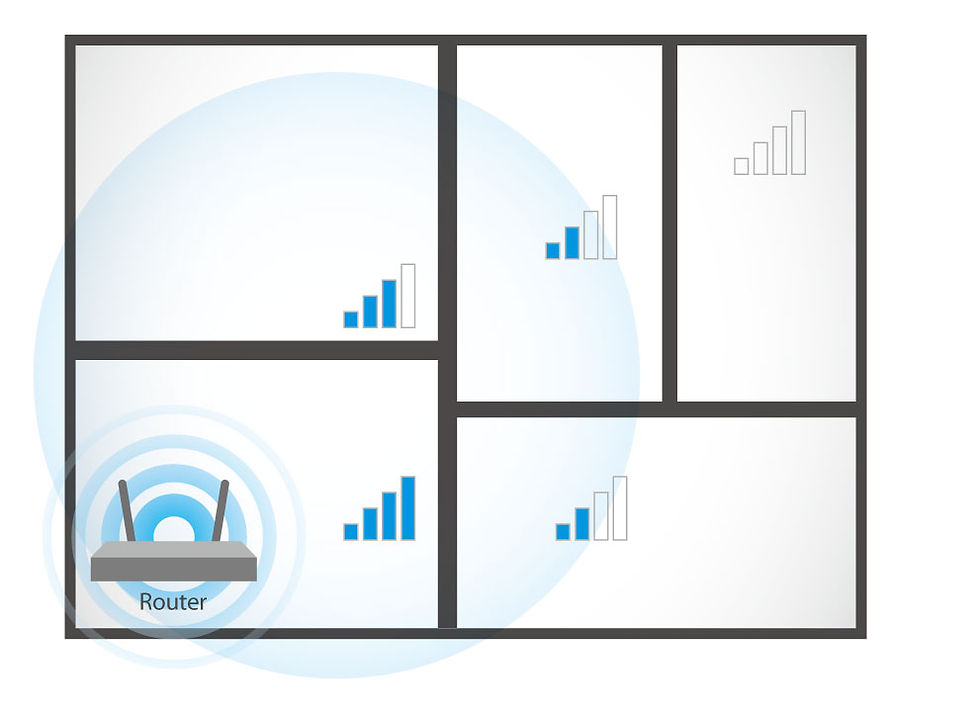
Many of the dead spots or weak signal strength has to do with the amount of “stuff” the signal has to go through. Walls, copper pipes, and ventilation systems all reduce the strength of the signal which lowers the speed of your data.
If there is a worst for wireless it would be security. Your wireless router is broadcasting a signal in every direction and it can be picked up by anybody and there are people who will hijack/steal/monitor your internet. They can also see exactly what you are doing using software such as WireShark. While there are ways to secure your internet, there are just as many ways to bypass those security measures. See (How to Hack Wi-Fi Passwords)
Wireless isn’t completely bad because at the end of the day it is convenient and relatively cheap as long as you aren’t hacked.
Hardwire on the other hand is more secure mainly because it doesn’t broadcast a signal to your neighbors. This means hackers can’t just drive around and find your Wi-Fi name from their vehicle. On other words you can’t get Air Hacked. Hackers would have to be connected to the internet and find you through a different means. Of course they can always hardwire into your network but that’s too much work and would draw more attention.

Just like wireless, hardwire has its benefits. Having as many devices hardwired to your router allows you to have 1000 Mbs/S per line (Cat5e). What this means is every device that is hardwired will have a speed of 1000 Mbs/S. If you are a gamer or you are running a business, then a hardwired system will increase your network speed.
The downside of the hardwired network is the cost of the cables which can run from .20 - .30 cents a foot however, once the cable is set, there is no maintenance required. The other limitation is distance and it is recommended to be under 100m otherwise you run into slower service.
While I have my preference of hard wired devices, I know that many products are becoming more and more wireless so I recommend a combination of both. For the avid gamers and business owners, go with the wired solution for all the heavy lifting. The wireless can be for the light duty work such as smart phones, smart watches, and other basic wireless devices. I would also recommend using higher quality wireless routers which we can install.
Feel free to give us a call at (858) 337-3356 or email info@themacwiz.com and we can set you up with higher quality service you deserve.


Comments